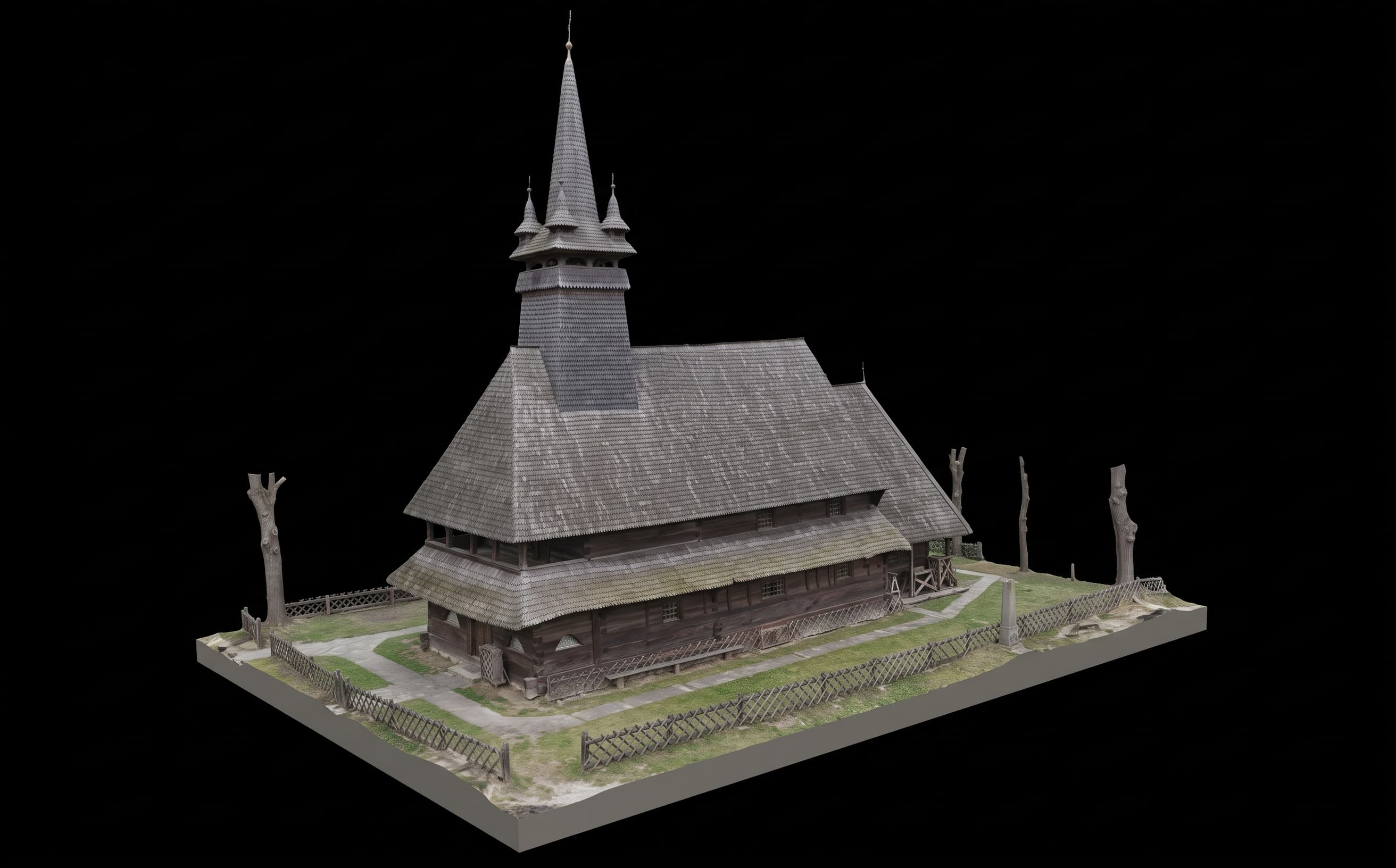
Church of Saint Nicholas
About object
The Church of Saint Nicholas in Sokyrnytsia, Khust District, is a notable monument of the Maramureș Gothic tradition and one of the most historically layered wooden churches in Zakarpattia. Originally built in the village of Shashvar, now Trosnyk, probably in the seventeenth century, it was transferred to Sokyrnytsia in 1704. Later additions, especially the tower erected in the late eighteenth century, altered the silhouette of what had first been a modest house-type church. The church remained in use through the nineteenth century and survived into the Soviet period, though after 1946 it was closed, much of its icon painting was stolen, and only fragments of the earlier interior were left. Architecturally, the church belongs to the Zakarpattian school and to the group of churches with Gothic spire-like terminations and roofs set at different levels above the altar and central body. The ensemble also includes a separate late eighteenth-century bell tower with a boarded base, shingled neck, and pyramidal roof. The church itself is four-part in plan, with four distinct spaces arranged within two principal log-built units and an upper roofed structure. Its west entrance passes through an exonarthex, and an encircling pent roof runs around the western and central parts. The main volume is covered by a tent roof with a straight gable at the apse and a three-sloped roof above the altar. Inside, the narthex has a barrel-vaulted board ceiling, while the nave and apse retain solid-beam barrel-vaulted ceilings and a solea before the iconostasis. The church’s greatest artistic value lies in its surviving wall painting and the paired predella icons, which preserve evidence of an early decorative phase dating to January 1748.
Work in progress
This section will be available soon.
Models
Work in progress
This section will be available soon.
Images