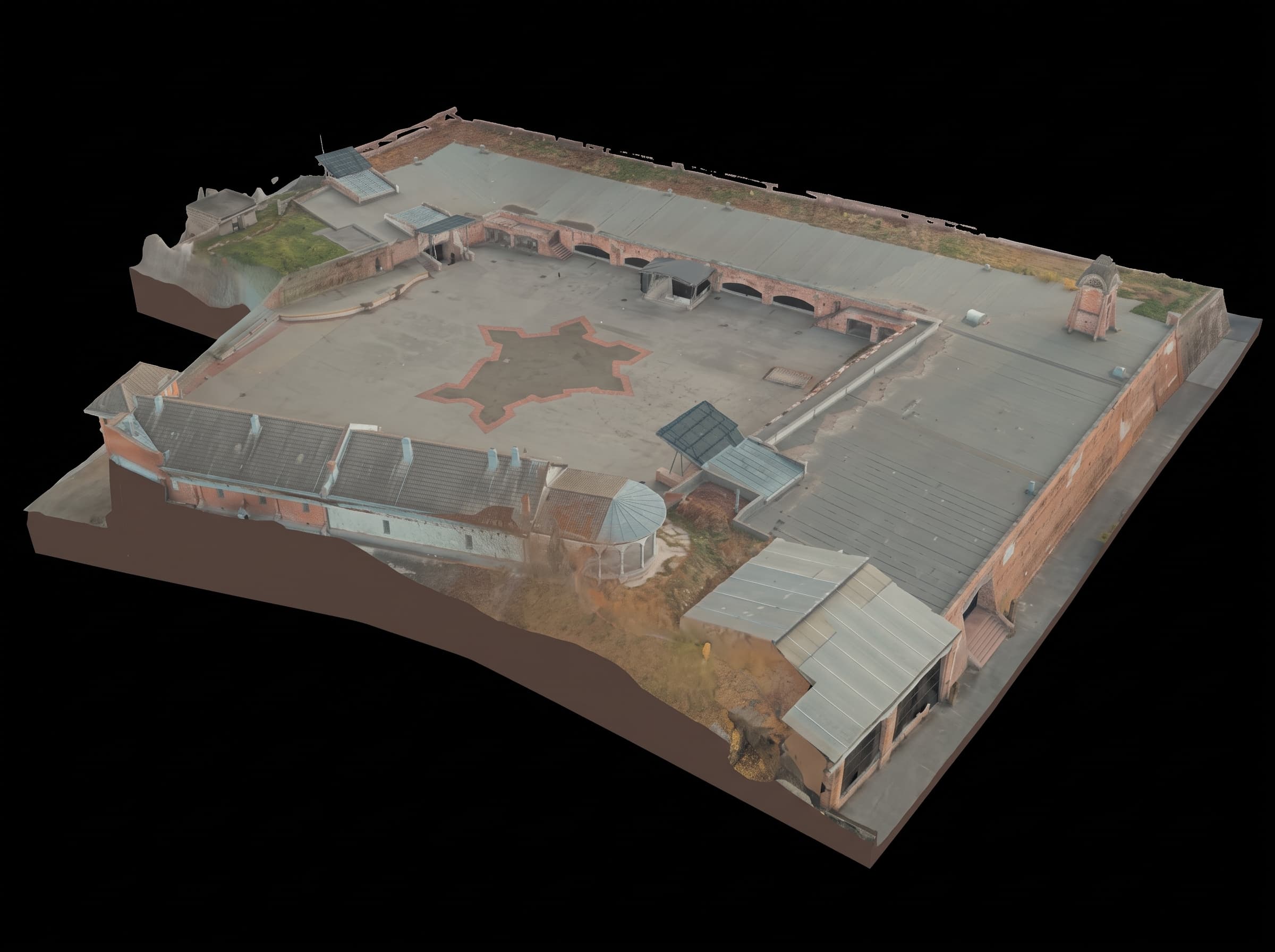
Bastion. Stanislav Fortress
About object
The Stanyslaviv Fortress is a former powerful fortification structure founded in 1662 on the territory of modern Ivano-Frankivsk, and is a historical and architectural monument of the 17th–19th centuries. The fortress city was erected in a short period (construction began in 1661) according to a project by the French engineer François Corassini in the shape of a regular hexagon with additional bastions and redoubts. The fortress was built according to the latest military engineering science, replacing traditional towers with external pentagonal fortifications — bastions, which provided flanking fire along the walls. Initially, the fortifications consisted of an earthen rampart 20–30 meters wide, reinforced on the outside with oak logs. As early as 1672, the fortress withstood a long siege by a large Turkish army. In 1734–1750, the palisade was replaced with stone and brick walls, the height of which reached 10 meters. The fortress was encircled by ramparts and moats filled with water, and entry into the city was possible only via drawbridges near the city gates — the Halytska and Tysmenytska gates, and the Virmenska (Lysetska) postern gate. After the annexation of Galicia to the Habsburg Monarchy in 1772, the fortress lost its defensive significance, and by an imperial decree of 1804, the walls began to be dismantled and the moats filled. To this day, only a part of the defensive brick wall has survived (next to the modern "Bastion" Fortress Gallery), as well as the remains of the Tysmenytska Gate, which were accidentally discovered in 2018.
Work in progress
This section will be available soon.
Models
Work in progress
This section will be available soon.
Images