Vyshnivets Palace
About object
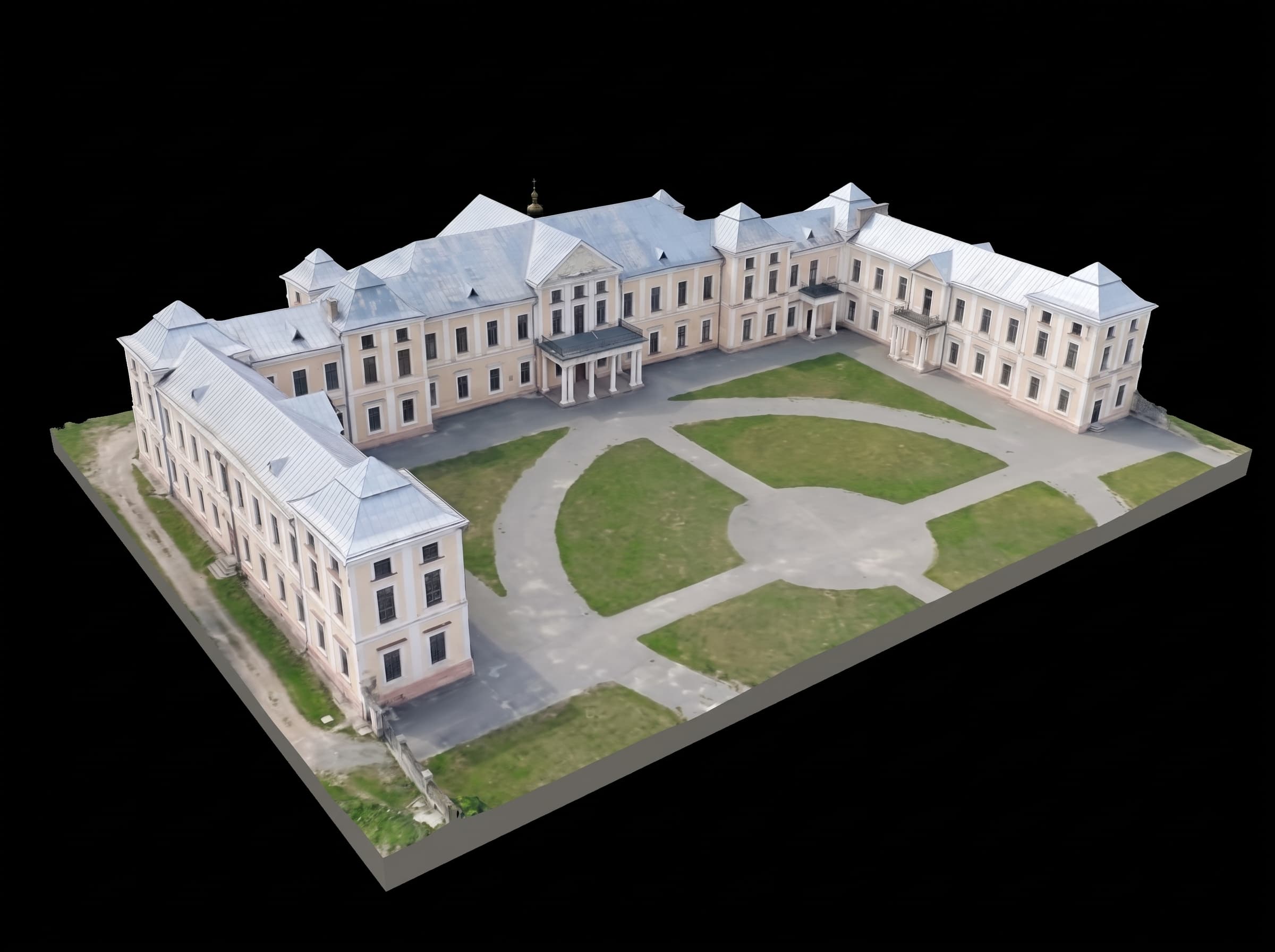
Vyshnivets Palace is a majestic 18th-century architectural monument of national importance, located in the urban-type settlement of Vyshnivets on the picturesque banks of the Horyn River. The palace is the former residence of the princely Vyshnevetsky family and was built on the site of a defensive castle, the first mention of which dates back to 1395. In 1640, the existing castle was modernized and fortified by Yarema Vyshnevetsky, who also included the Carmelite monastery into the defensive system. In the 1730s, the last representative of the family, Mykhal Servatsiy Vyshnevetsky, rebuilt the family stronghold into a luxurious palace based on a project by the architect J. Blanger, imitating French country residences. After his death, the estate passed to the noble Mniszech family, who added royal splendor to the palace, filling it with priceless collections of paintings, sculptures, and antique furniture. The architecture of the palace combines features of late Baroque and Classicism: it has an elongated two-story building in plan, a symmetrical U-shaped composition, and a central facade with a risalit crowned by a triangular pediment. The ceremonial gates were made in imitation of ancient triumphal arches. Parallel to the main buildings, a large English-style landscape park was laid out, which was likely created by Dionysius McClair. The palace, which Honoré de Balzac called the "little Versailles," suffered significant destruction during the First and Second World Wars but was partially repaired in the post-war period. Since 2005, the complex has been part of the National Reserve "Castles of Ternopillia".
Work in progress
This section will be available soon.
Models
Work in progress
This section will be available soon.
Images